

'We Sell to Everyone.' Those Four Words Are Costing You a Fortune.
You are working hard. You are spending money. And you have nothing to show for it.
I have seen this pattern hundreds of times. I see it in the businesses I consult for through Communication-IMPACT. I see it every semester in the entrepreneurs sitting in my digital marketing classes at Concordia University. The problem is rarely the platform. It is rarely the budget. It is almost always this: they do not know who they are talking to.
That is where the Ideal Customer Persona comes in.
I have spent over 40 years in B2B sales and marketing. One of the first things I do with every new client is ask one question: "Can you show me a living document that describes everything about your ideal customer?"
Most cannot. The most common answer I get? "We sell to everyone. Everybody can use our product."
That answer tells me everything I need to know.
- It tells me their marketing is scattered, unfocused, and expensive.
- It tells me they are shouting into a crowded room and hoping someone shouts back.
This article will show you how one tool, a well-built Ideal Customer Persona, directly addresses the ten biggest digital marketing challenges facing small and medium-sized businesses today. The ten challenges come from a research article published
September 2nd, 2025. Not theoretical. Practical. Let me show you how it works.
What is an Ideal Customer Persona?
An Ideal Customer Persona (ICP) is a detailed, semi-fictional profile of your perfect customer. Demographics are part of it, but that is just the surface.
The real work is understanding their motivations, their frustrations, their daily routines, and what keeps them up at night.
Think of it less like a spreadsheet and more like a portrait.
- You give this person a name, a job title, and a story.
- You understand what problems they are trying to solve.
- You know where they spend their time online.
- You know what a good day looks like for them and what a bad one feels like.

Here is a simple example. A local coffee shop's ICP is not "people who drink coffee." It might be "Freelance Fiona," a 32-year-old graphic designer who needs reliable Wi-Fi, values ethically sourced beans, and finds new spots through Instagram. Once you know Fiona, marketing to her is straightforward. You know exactly where to find her and what to say.
Some businesses are just starting out and have not built their ICP yet. Others have been operating for years but treat it as a one-time exercise, filed away on a hard drive no one opens anymore. The ICP should be a living document. You add to it. You refine it. Every insight you gather makes the portrait sharper and more useful.
How the ICP Simplifies Your Top 10 Marketing Challenges
The beauty of the ICP is that its benefits ripple through every aspect of your digital marketing strategy. It’s the master key that unlocks efficiency and effectiveness, providing clarity where there was once confusion. (The top ten marketing challenges are from a research article printed
September 2nd, 2025.)
1. Limited Budgets: Spending Where It Counts
A significant 65% of SMBs struggle with budget limitations in a typical year.
When every dollar matters, you cannot afford to scatter money across broad campaigns and hope something sticks.
Your ICP changes that. When you know "Freelance Fiona" spends her time on Instagram, you put your money on Instagram. You do not run a generic ad to your entire city. You run a targeted ad to her specific profile and mention your reliable Wi-Fi and quiet workspace.
Email marketing generates an average ROI of $42 for every dollar spent. The return is that high because the targeting is tight.
One more thing on limited budgets. I have watched too many entrepreneurs get sidetracked by well-meaning advice from friends, colleagues, and other business owners. They mean well. But their ICP is not your ICP. Following advice built for someone else's customer is one of the fastest ways to drain your budget and your energy. Your ICP keeps you on track. It stops your marketing from being hijacked.
2. Lack of Time: Focus on What Moves the Needle
56% of SMBs globally report they have an hour or less per day for marketing. That is not much runway.
Every semester I survey my students at Concordia. Time is consistently the biggest barrier to executing a consistent marketing strategy. I hear the same thing from my clients. Every entrepreneur wants more of it.
The only way to get more out of the time you have is to stop wasting it on guesswork.
Your ICP does that.
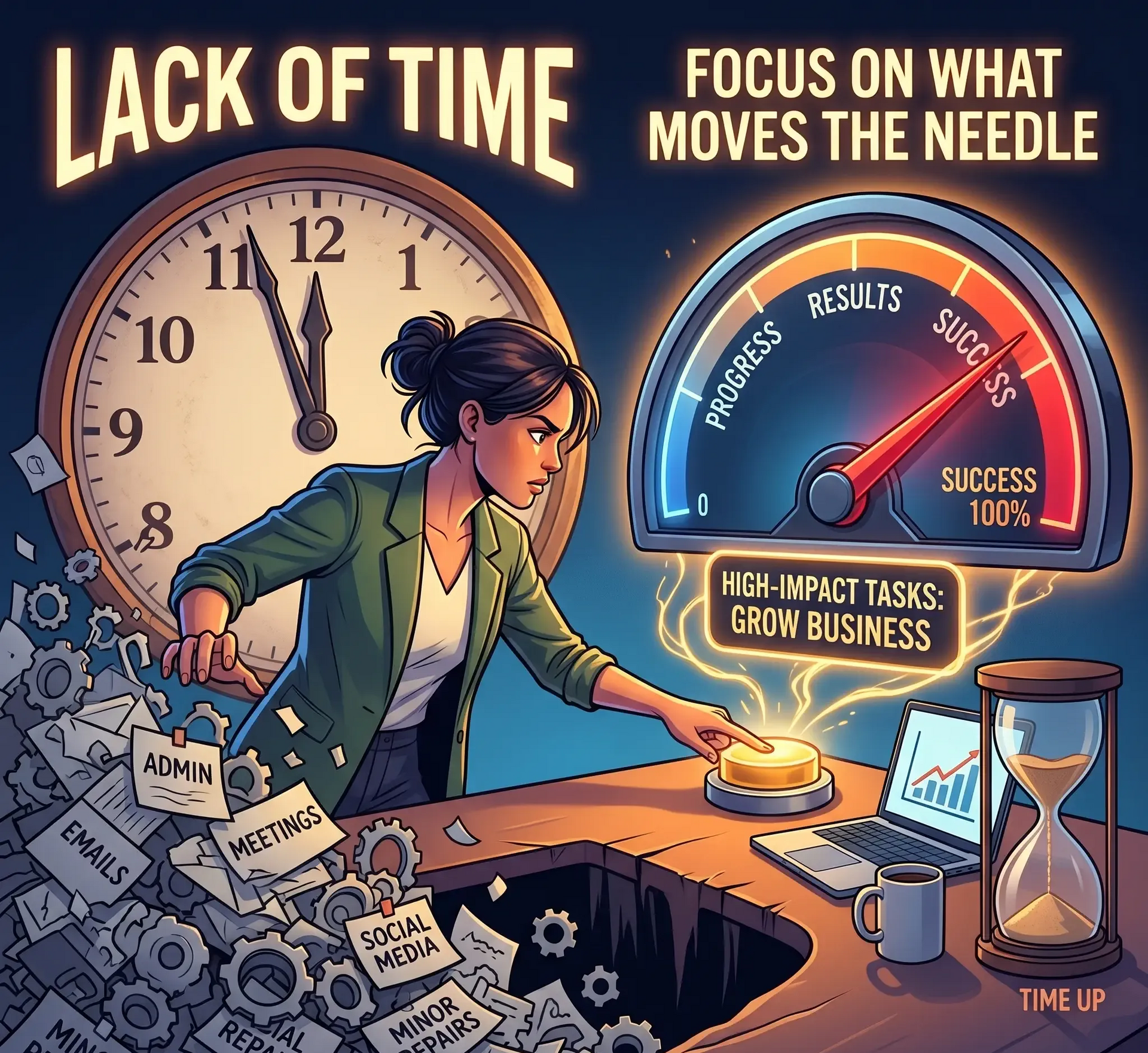
When you know Fiona is interested in local art, co-working tips, and unique coffee recipes, your content calendar writes itself. You stop staring at a blank screen wondering what to post. You concentrate your efforts on high-impact work instead of trying to cover everything at once.
3. Difficulty Measuring ROI: Knowing What Works
While measuring ROI is a top priority for 83% of marketing leaders, only 36% of marketers report they can actually do it accurately. For SMBs without a dedicated analytics team, that number is probably lower.
The ICP makes measurement cleaner. When your campaign is built around a specific persona, you can create a dedicated landing page, track conversions from that specific ad, and analyze whether the ICP-targeted content is driving real engagement. The more targeted the strategy, the easier it is to isolate results.
One note from my years running businesses and consulting: do not get caught up in vanity metrics. Your first KPI is sales. The number of followers and likes on your social media platforms is irrelevant until there is revenue attached to them.
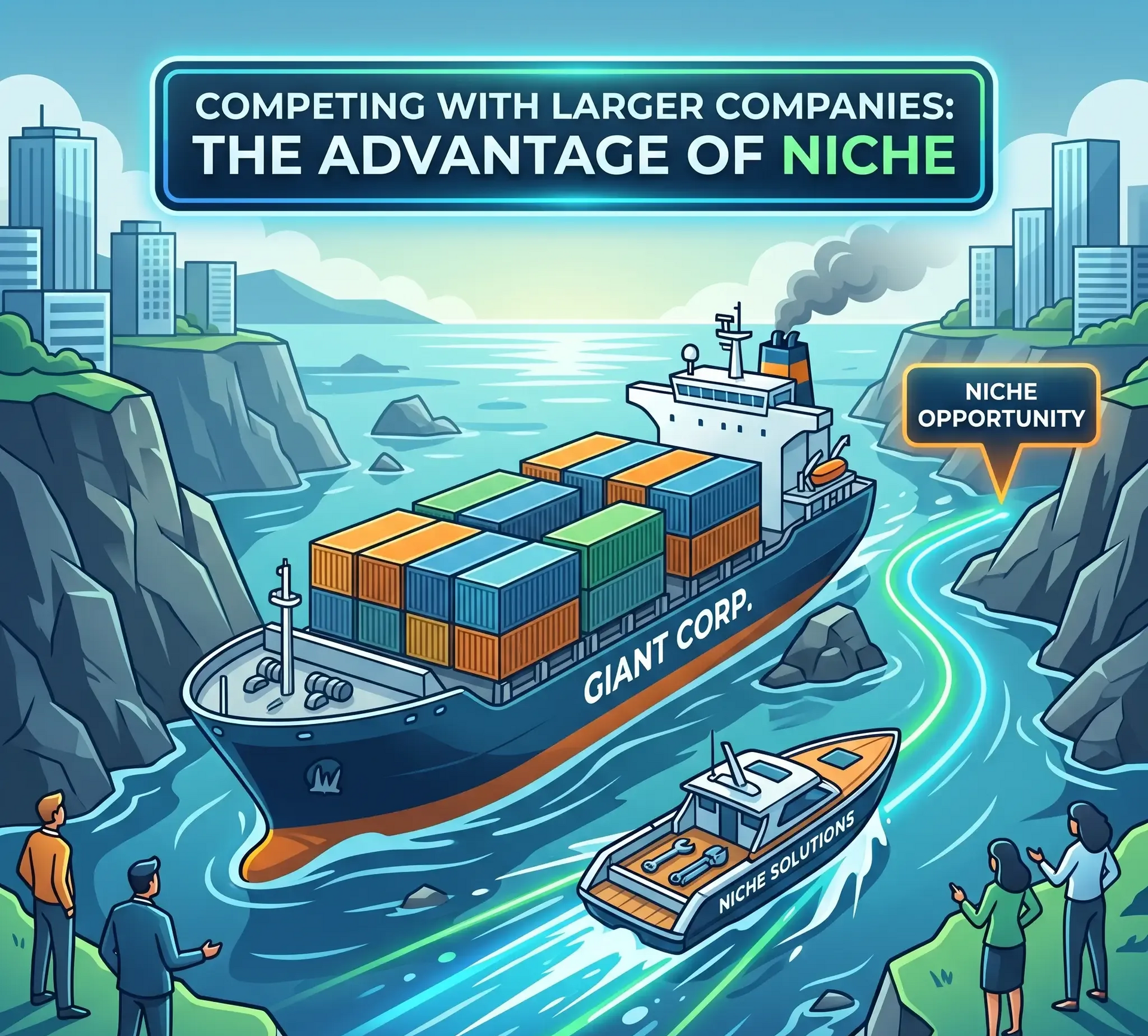
4. Competing with Larger Companies: The Advantage of Niche
Big companies have big budgets and broad brand recognition. It can feel like a mismatch.
I lived this firsthand. I worked for a Montreal startup commercializing a product for the international upstream oil and gas market. Twelve people on our team. Our competitors were Schlumberger Oil Field Services and Halliburton, two multi-billion-dollar companies. We did not try to beat them across the board. We niched down our message to resonate with our specific ICP.
The first result: a number two ranking on Google for our niche application.
The second result came from that ranking. An oil field consultant working with companies in the North Sea found our website and gave us a call.
The third result: our first order totalled US$4.5 million.
Large companies struggle to replicate the authentic, direct connection a small business can build with its specific customer. That is your competitive advantage. Your niche specialization is what separates you.
Use it.
5. Understanding the Target Audience: Moving Past Guesswork
"Reaching customers and growing sales" was the top operational challenge for 57% of SMBs in 2024, up from 53% in 2023.
That number is moving in the wrong direction.
The ICP fixes this at the root. It pushes you to gather real insights from CRM data, customer surveys, and website analytics. It forces you to move beyond assumptions. Understand this, even a good ICP produces prospects that look right but cannot buy.
For many SMBs, the ICP is local, and that creates a real opportunity. Only 19% of small businesses are currently using local SEO and Google My Business effectively.
That is a wide open door.
With the AI tools available today, you can build a detailed first draft ICP faster than you think. I use an fifteen-step prompting sequence to do exactly that. More on that at the end of this article.
6. Keeping Up with Digital Trends: Filtering the Noise
New platforms. New algorithms. New tools.
The pace does not slow down.
I teach SEO and social media every semester at Concordia. To stay current, I rewrite 20 to 35% of my curriculum every semester. I tell my students that much of what they learn this semester will be outdated in 18 months.
They laugh.
I am not joking.
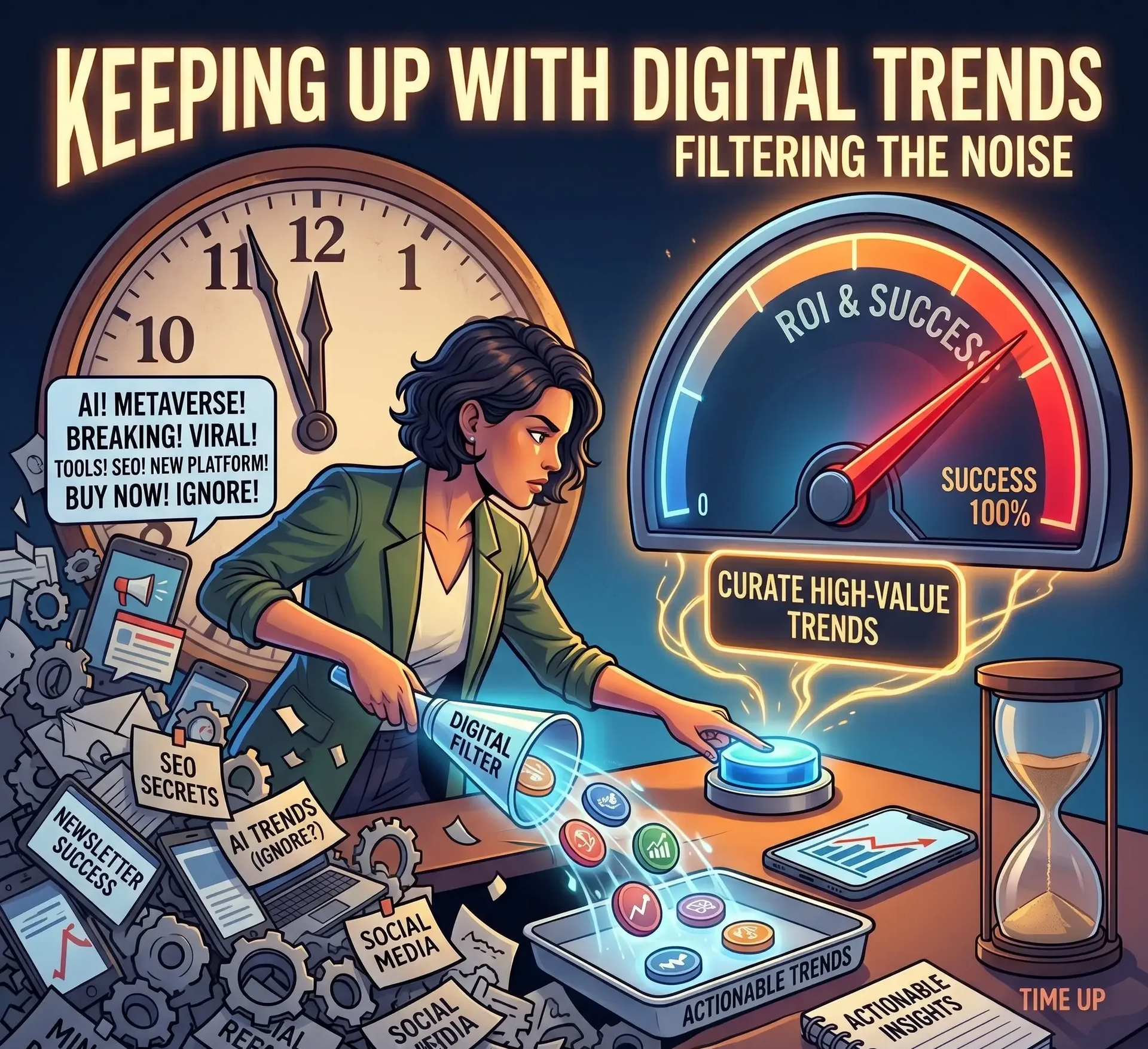
Your ICP acts as a filter. Instead of trying to be everywhere, you focus on where your persona spends their time. If Fiona is on Instagram and TikTok, you can ignore whatever is trending on platforms she never visits. If she responds well to video, you prioritize short-form video content.
High impact. Low production cost. That is a good trade.
7. Lack of Expertise: Getting More from Outside Help
Without an in-house marketing specialist, the learning curve is steep. The rise of AI tools adds another layer. 55% of small business owners are already using AI, primarily for marketing personalization and saving time.
The ICP makes outside expertise easier to deploy. When you hire an agency or a freelancer, you hand them a clear persona instead of a vague brief. They know exactly who they are writing for and what that person needs to hear.
The ICP also makes AI tools more effective. Clear persona details translate directly into clear prompts, and clear prompts get better outputs. I have developed an fifteen-step AI prompting sequence built around a client's ICP.
The difference in output quality is not subtle.
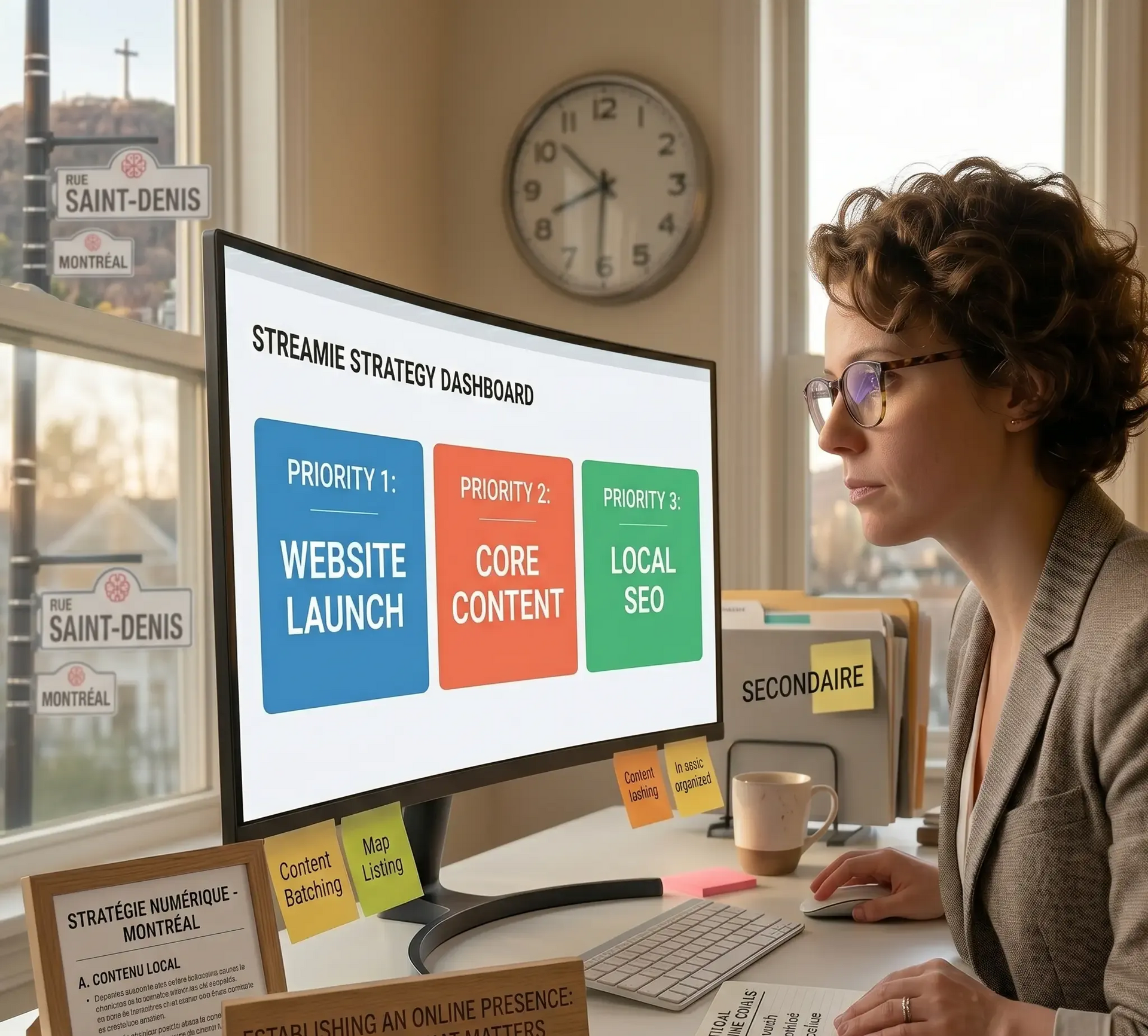
8. Establishing an Online Presence: Prioritizing What Matters
81% of consumers say having a website matters when evaluating a business. A basic small business website runs between $6,500 and $15,000. A simpler brochure site can be built for $1,000 to $7,000.
Your ICP tells you where to focus. For Fiona, a clean, mobile-friendly website and a well-maintained Instagram profile are the priority. You do not need an elaborate build to start making an impression.
Google My Business is free and significantly improves your visibility in local search results. Start there.
Your ICP tells you exactly which platforms need your attention and which ones do not.
9. Content Creation: Never Running Out of Ideas
70% of companies are investing in content marketing. Yet 33% of marketing and media leaders still say creating high-quality content is their biggest challenge.
Your ICP is the answer.
When every piece of content is written for a specific person, it stops feeling generic. You know Fiona's problems. You write content that addresses them directly.
Short-form video delivers ROI 49% faster than text-based content, and 67% of SMBs are already using AI to assist with content creation and SEO.
With a clear ICP, your AI prompts become specific and your outputs become genuinely useful.
10. Mobile Optimization: Meeting Customers Where They Are
Mobile traffic now accounts for more than 60% of all website traffic.
For e-commerce, it is over 70%. And 40% of users will leave your site for a competitor after a bad mobile experience.
Think about how Fiona uses her phone. She is looking up your location, checking your hours, and scrolling your Instagram feed.
Every touchpoint she has with you on mobile needs to work without friction. Use Google's Mobile-Friendly Test to check your site. Make sure your forms, buttons, and images load cleanly on a small screen. One bad experience and she is gone.
Your ICP makes mobile a priority because your persona's behaviour tells you it has to be.
Where Do You Start?
The ICP is not a one-time exercise. It is the foundation of every marketing decision you make.
Once you know your ideal customer well, the questions get easier.
- Where should you advertise?
- What should you write about?
- Which platform deserves your time?
The ICP answers all of them.
Start with your most profitable product or service group. Build your ICP for the customer who buys that product. Work to get more of those customers. That is your first move.
On the question of how many ICPs to build: look at your product and service groupings. Each group often deserves its own persona. Do not try to build five at once. Build one well and let the rest follow.
Ready to start?
Tell me what you know about your best customer. What do they look like? I will build your comprehensive ICP and then offer some guidelines on how this can help you overcome the common digital marketing challenges many entrepreneurs face.